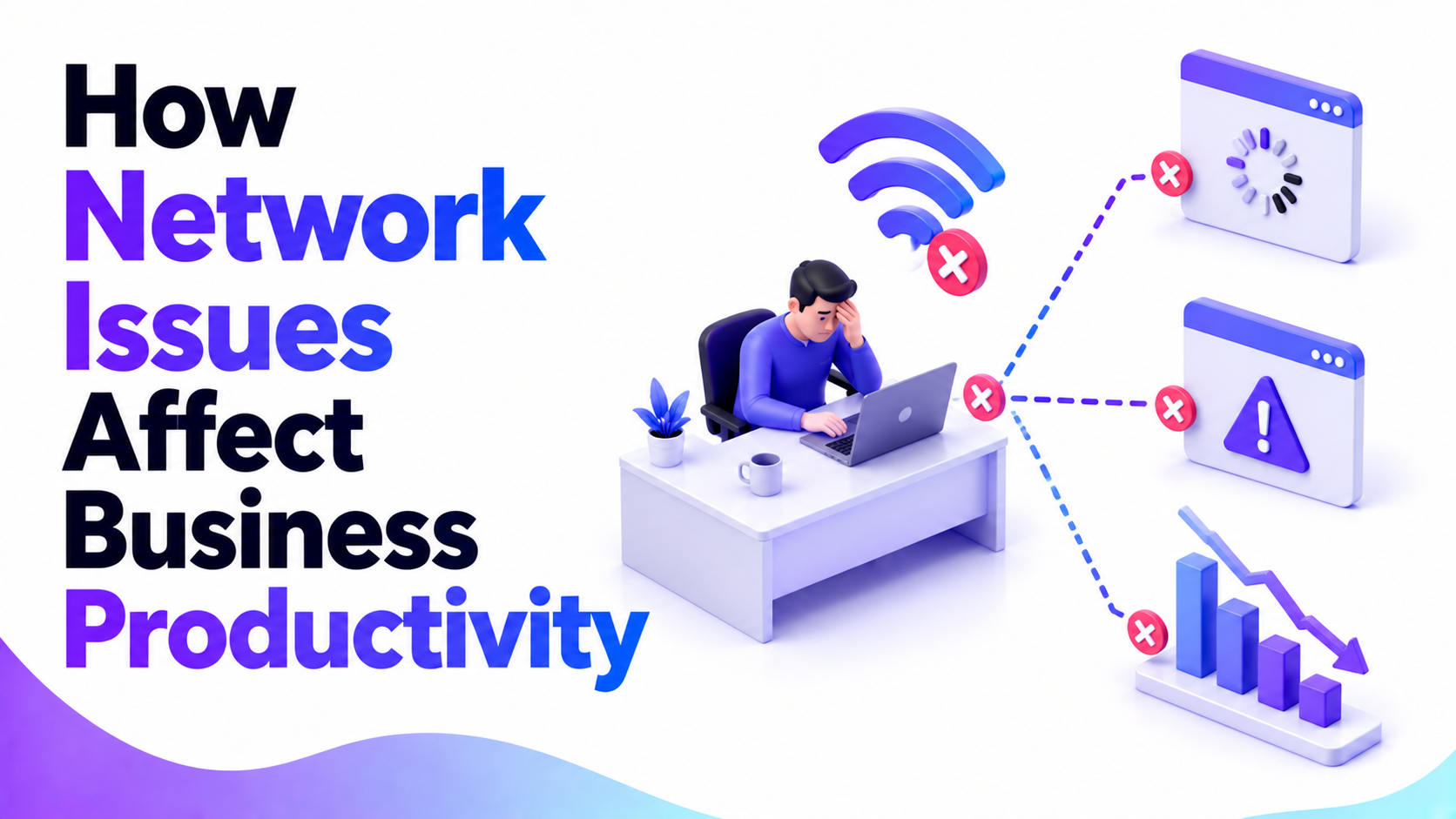
Modern businesses depend on reliable network connectivity more than ever before. Whether employees are accessing cloud applications, sending emails, attending video meetings, processing transactions, or collaborating with remote teams, network performance directly impacts daily operations.
When network problems occur, productivity often suffers immediately.
Slow connections, intermittent outages, poor WiFi coverage, VPN failures, and bandwidth congestion can create significant operational challenges for organizations of all sizes.
Unfortunately, many businesses underestimate the true cost of network-related disruptions until they begin affecting employees and customers.
In this article, we’ll explore how network issues impact productivity, the most common causes of connectivity problems, and how businesses can minimize downtime through proactive support and maintenance.
Why Network Reliability Matters
In today’s digital workplace, nearly every business process depends on network connectivity.
Examples include:
- Email communication
- Cloud applications
- Customer support systems
- File sharing
- Video conferencing
- Online transactions
- Remote access solutions
When the network performs poorly, employees may be unable to access the tools they need to perform their work efficiently.
Reliable connectivity has become a fundamental business requirement.
The Hidden Cost of Network Problems
Many organizations focus only on major outages.
However, smaller connectivity issues can create significant cumulative costs over time.
Examples include:
Delayed Workflows
Employees spend more time waiting for systems to respond.
Reduced Efficiency
Tasks take longer to complete.
Increased Frustration
Users become distracted by recurring technical problems.
Customer Service Delays
Support teams may struggle to access information quickly.
Lost Revenue Opportunities
Sales processes may be interrupted.
The impact often extends far beyond the technical issue itself.
Problem #1: Slow Internet Connections
Slow internet performance is one of the most common business complaints.
Employees may experience:
- Slow website loading
- Delayed application responses
- Long file transfers
- Poor cloud service performance
Productivity Impact
Even small delays repeated throughout the day can significantly reduce overall efficiency.
Common Causes
- Bandwidth limitations
- Network congestion
- ISP issues
- Outdated equipment
Business Consequence
Employees spend more time waiting and less time working.
Problem #2: WiFi Connectivity Issues
Wireless networks are essential in most modern workplaces.
However, poor WiFi performance can create challenges such as:
- Weak signals
- Dead zones
- Frequent disconnects
- Slow speeds
Productivity Impact
Employees may lose connectivity during important tasks.
Video meetings, cloud applications, and communication tools may become unreliable.
Business Consequence
Work interruptions increase while employee frustration grows.
Problem #3: Network Downtime
A complete network outage can bring operations to a halt.
Without connectivity, employees may lose access to:
- Email systems
- Cloud applications
- Shared files
- Business software
Productivity Impact
Work may stop entirely until connectivity is restored.
Business Consequence
Revenue, customer service, and internal operations may all be affected.
Downtime is often one of the most expensive networking problems.
Problem #4: VPN Connectivity Problems
Many organizations rely on VPNs to provide secure access for remote workers.
Common VPN issues include:
- Failed connections
- Authentication errors
- Slow performance
- Session interruptions
Productivity Impact
Remote employees may be unable to access critical business systems.
Business Consequence
Remote work becomes less effective and collaboration may suffer.
Problem #5: Video Conferencing Performance Issues
Video meetings have become a standard part of business communication.
Network problems can lead to:
- Audio delays
- Frozen video
- Dropped calls
- Poor call quality
Productivity Impact
Meetings become less efficient and communication becomes more difficult.
Business Consequence
Internal collaboration and customer interactions may be negatively affected.
Problem #6: Cloud Application Performance Problems
Many organizations depend on cloud platforms such as:
- Microsoft 365
- Google Workspace
- CRM systems
- Project management tools
- Accounting software
Poor network performance often affects these applications directly.
Productivity Impact
Employees experience:
- Slow synchronization
- Delayed access
- Application errors
Business Consequence
Workflows become less efficient and response times increase.
Problem #7: File Sharing Delays
Businesses frequently transfer files between:
- Employees
- Departments
- Branch offices
- Customers
Network bottlenecks can slow these processes significantly.
Productivity Impact
Projects may be delayed while waiting for files to upload or download.
Business Consequence
Team collaboration becomes less effective.
Problem #8: Network Security Incidents
Security-related network issues can affect productivity as well.
Examples include:
- Malware infections
- Unauthorized access attempts
- Network misuse
- Security-related outages
Productivity Impact
Systems may become unavailable or restricted.
Business Consequence
Recovery efforts consume valuable time and resources.
Strong network security supports business continuity.
Problem #9: Device Connectivity Issues
Users frequently encounter problems connecting devices such as:
- Printers
- Scanners
- Shared storage
- Wireless devices
Productivity Impact
Employees may be unable to complete routine tasks.
Business Consequence
Support requests increase and workflows slow down.
How Network Problems Affect Employee Morale
Technology frustrations often influence workplace satisfaction.
Repeated network issues can lead to:
- Increased stress
- Reduced motivation
- Lower confidence in technology systems
Employees perform best when systems work reliably.
A stable network environment contributes to a more productive workplace.
How Network Problems Affect Customer Experience
Customers may also feel the impact of connectivity issues.
Examples include:
Delayed Responses
Support teams may struggle to respond quickly.
Service Interruptions
Customer-facing systems may become unavailable.
Slower Transactions
Purchases and requests may take longer to process.
Reliable networking helps create a better customer experience.
The Importance of Proactive Network Management
Many network issues can be prevented through proactive maintenance.
Best practices include:
Performance Monitoring
Identify bottlenecks before users are affected.
Firmware Updates
Maintain security and reliability.
Capacity Planning
Prepare for business growth.
Security Reviews
Reduce exposure to threats.
Infrastructure Optimization
Improve efficiency and stability.
Prevention is often less costly than reactive troubleshooting.
Signs Your Business May Have Network Problems
Common warning signs include:
- Frequent connectivity complaints
- Slow internet performance
- Unstable WiFi
- VPN issues
- Video conferencing problems
- Cloud application delays
Addressing these symptoms early helps prevent larger disruptions.
Why Professional Network Support Matters
Modern networks are increasingly complex.
Professional support can help businesses:
- Diagnose connectivity problems
- Optimize performance
- Improve security
- Reduce downtime
- Support remote workers
Experienced technicians often identify issues more quickly than internal troubleshooting efforts.
The Benefits of Reliable Network Infrastructure
Organizations with stable networks often experience:
Higher Productivity
Employees spend less time troubleshooting.
Better Collaboration
Communication tools work consistently.
Improved Customer Service
Teams respond more efficiently.
Greater Business Continuity
Operations remain available and reliable.
Enhanced Security
Risks are reduced through proper management.
Reliable connectivity supports overall business success.
Professional Technical Helpdesk & Remote Support from PLiKhost
Network issues should not prevent your business from operating efficiently.
The Technical Helpdesk & Remote Support service from PLiKhost provides professional assistance for network troubleshooting, WiFi optimization, VPN configuration, and connectivity-related challenges.
Services include:
- Network diagnostics
- WiFi troubleshooting
- VPN setup and support
- Connectivity issue resolution
- Device configuration
- Performance optimization
- General IT assistance
Whether you need a one-time fix, prepaid support hours, or ongoing monthly support, PLiKhost provides expert remote assistance to help keep your business connected.
Learn more here:
https://plikhost.com/technical-helpdesk-remote-support/
Conclusion
Network performance has a direct impact on employee productivity, customer satisfaction, and overall business efficiency.
Slow connections, WiFi problems, VPN issues, cloud application delays, and network outages can all disrupt operations and create hidden costs.
By proactively managing network infrastructure and addressing issues quickly when they occur, businesses can reduce downtime, improve productivity, and create a more reliable technology environment.
For organizations that depend on connected systems, professional network support is a valuable investment in long-term operational success.